5 Marine Plastics impacts
5.1 What’s the harm?
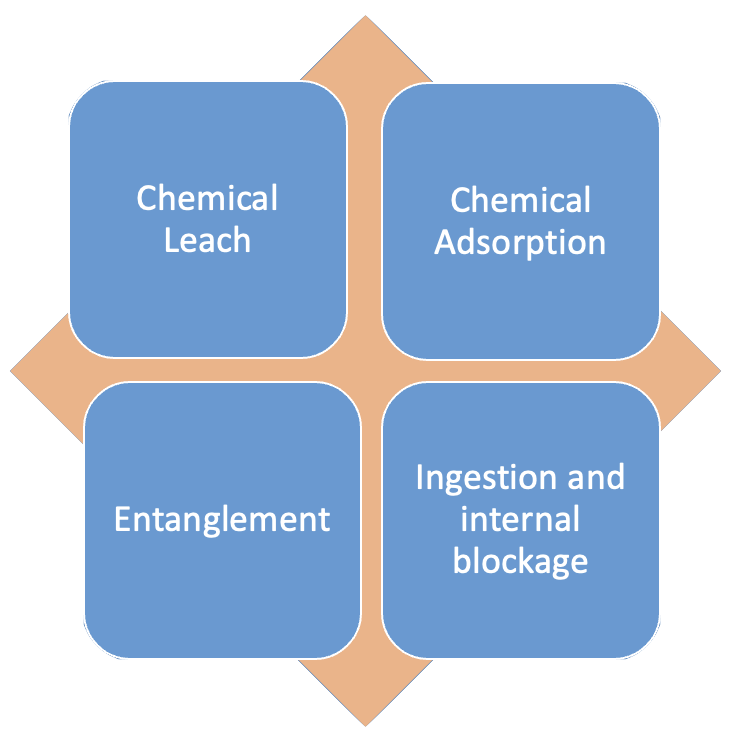
Microplastics can bring harm to marine organisms in a variety of ways:
- Chemical leaching: Plastics are organic polymers that are often impregnated with additional compunds that givve them particular properties, such as colour and fire retardence. These chemical may be toxic and may become detached from the host polymer molecules.
- Chemical adsorbence: Their large surface area to volume ratio means that microplastics can attract to themselves toxic molecules that stick to their surfaces.
- Entanglement: Abandoned or ‘ghost’ fishing tackle can entangle marine organisms.
- Ingestion: Ingestion of microplatics can have various effects, such as simply blocking intestinal tracts, altering of bouyancy, supperssion of appetite and more.
5.2 Which organisms are affected?
5.2.1 Primary producers
These can be affected in numerous ways: ingested microplastics can replace actual food, they cause blocking of internal tracts and affect buoyancy, among other things.
The following papers give a flavour of this:
Microalgae
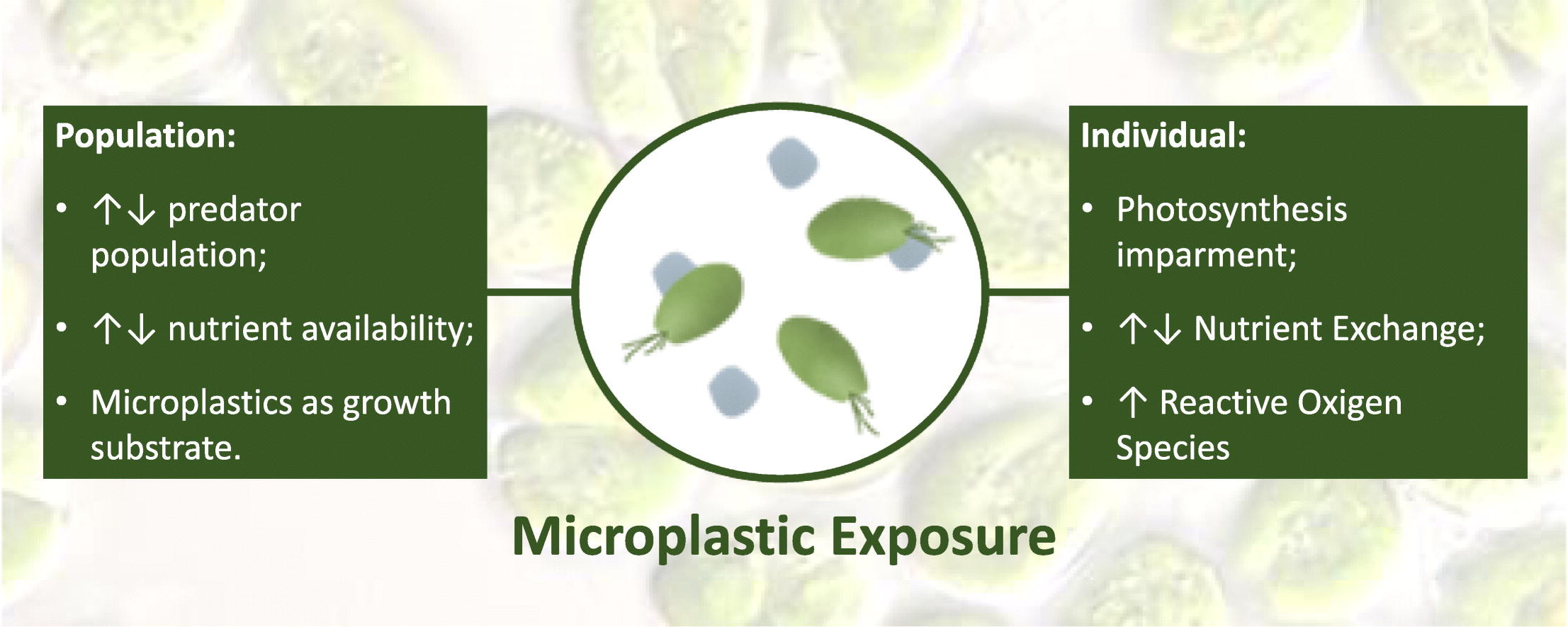
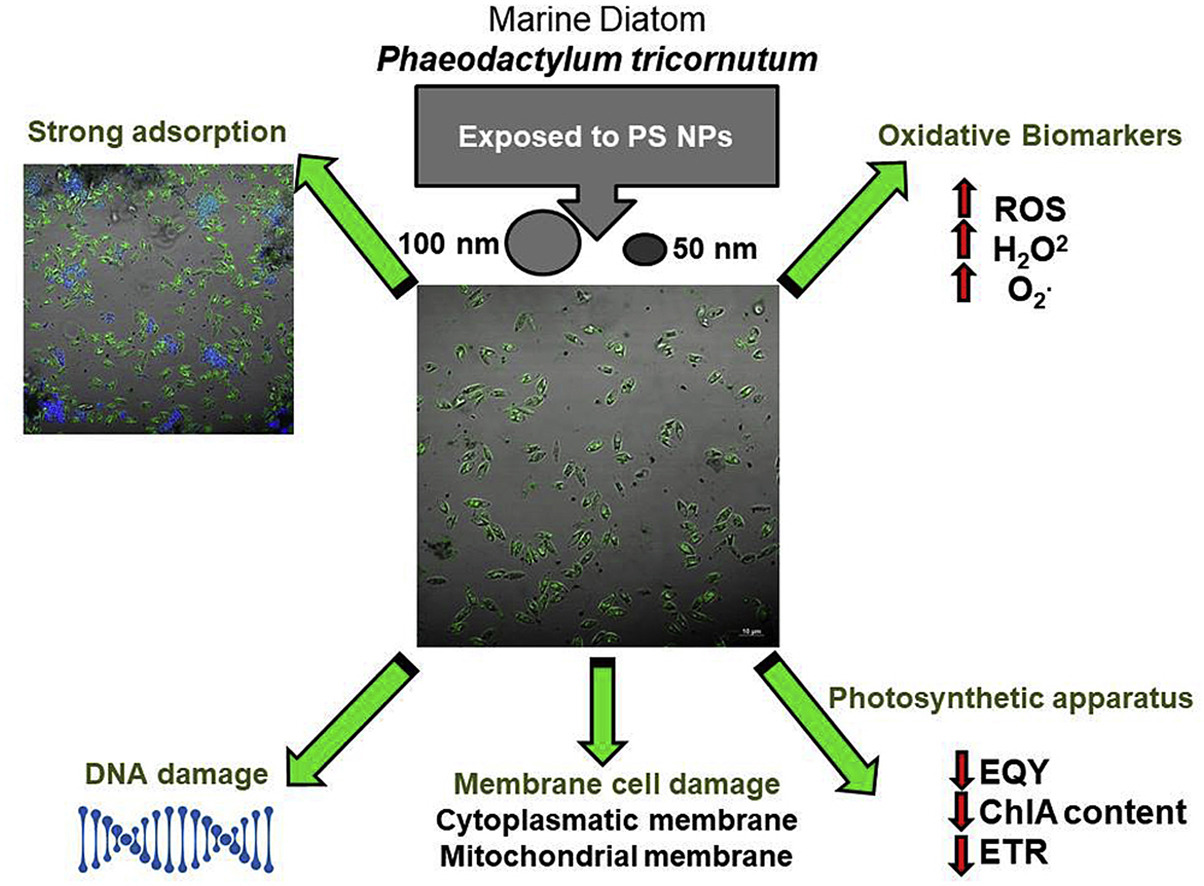
Prata et al (2019) find various evidence in the literature for impacts of microplastics on microalgae at the individual and population level.
Zooplankton
Cole and co-workers (2013) found that microplastics of different sizes can be ingested, egested and adhere to a range of zooplankton
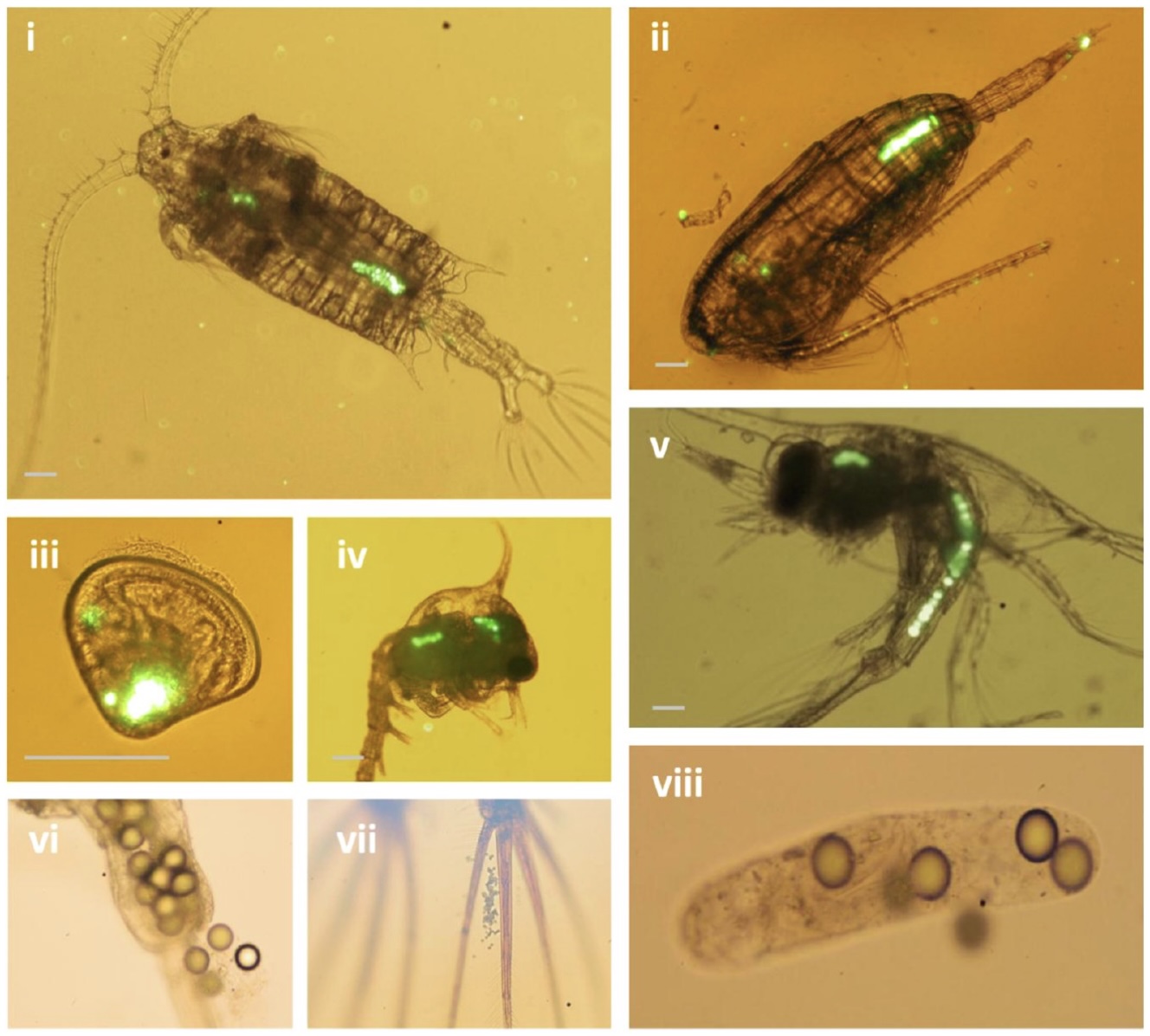
Coppock and co-workers (2019) found that microplastics alter feeding selectivity and faecal density in the copepod Calanus helgolandicus.
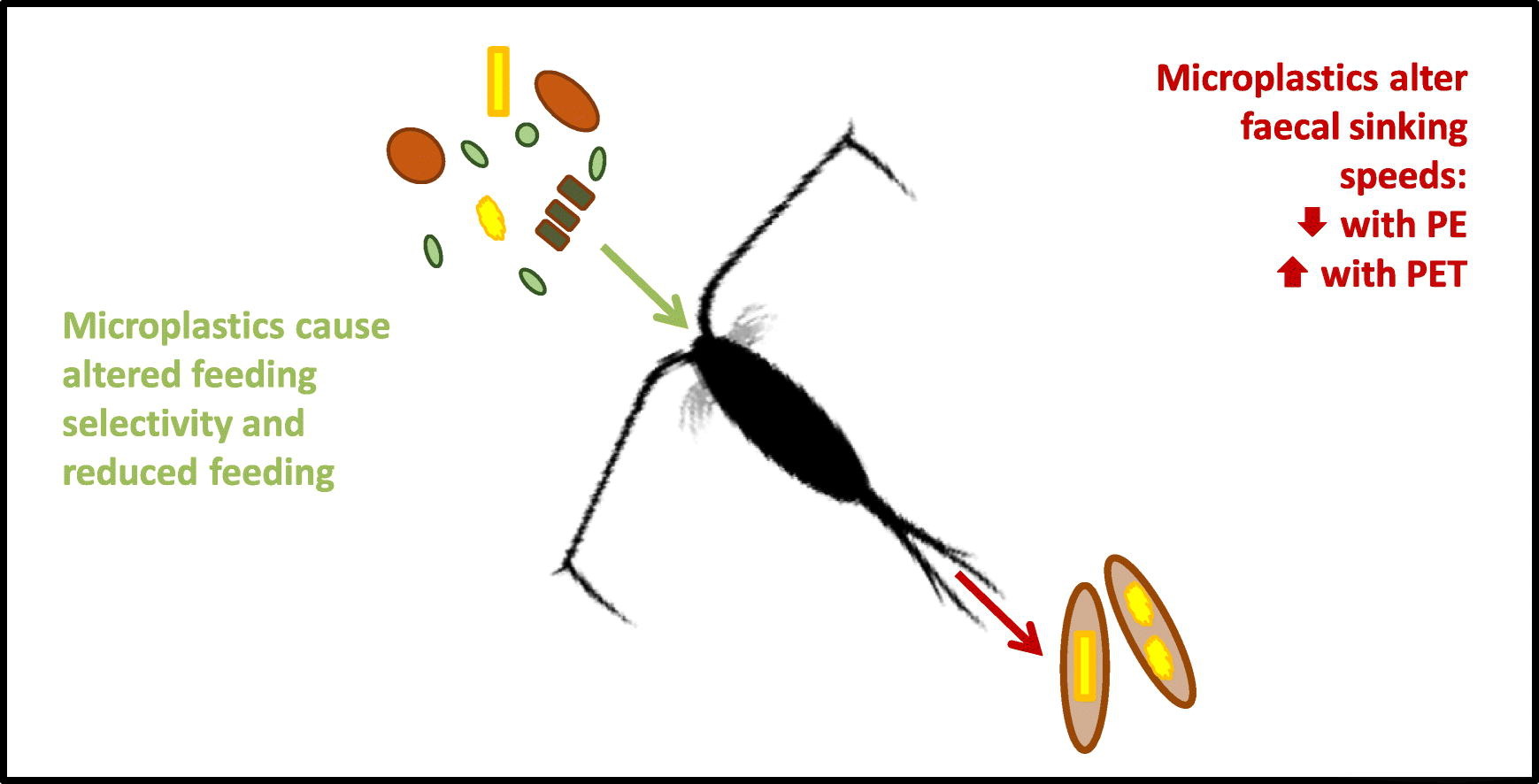
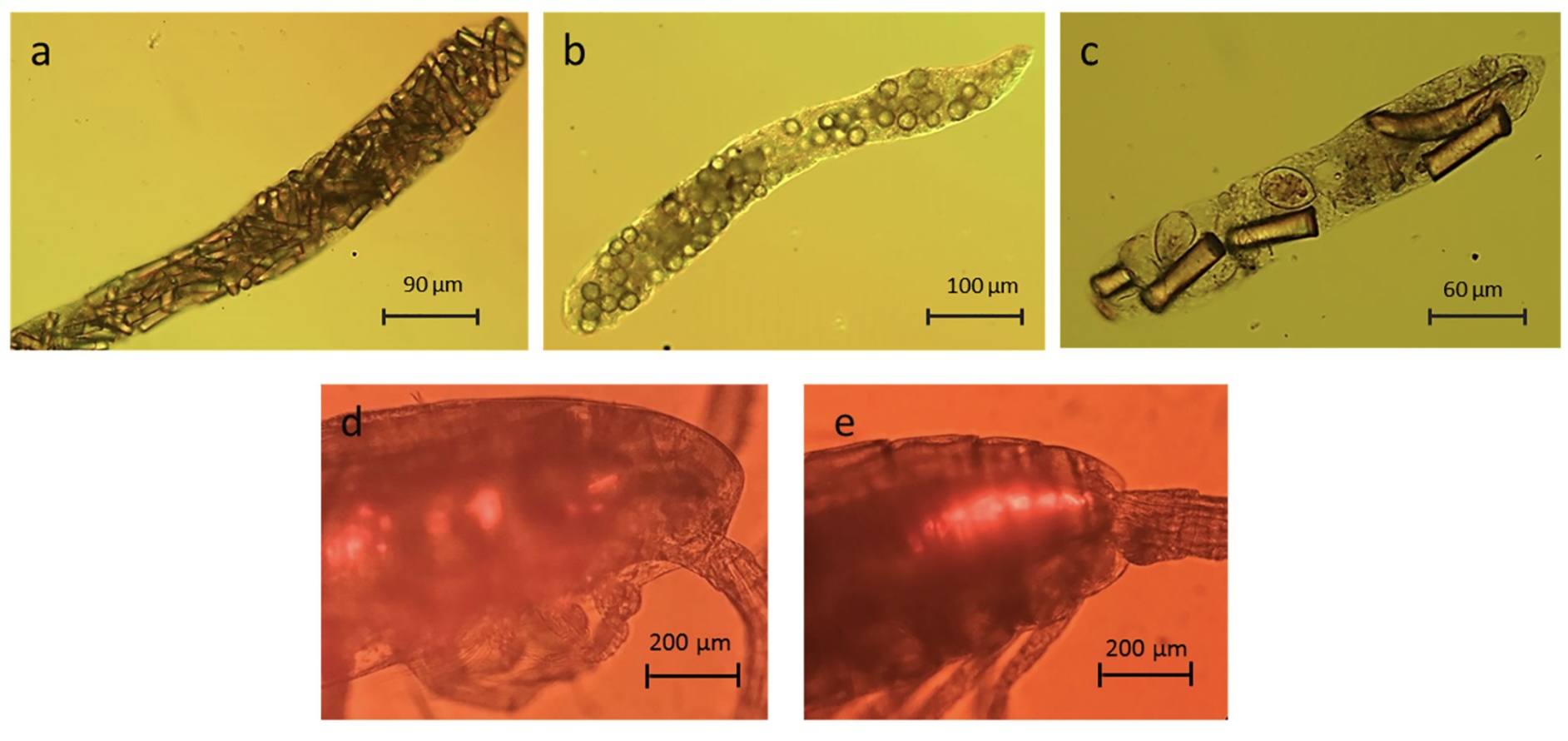
Exposure to nylon fibres resulted in a 6% decrease in ingestion of similar shaped chain-forming algae,whilst exposure to nylon fragments led to an 8% decrease in ingestion of a unicellular algae that were similar in shape and size.
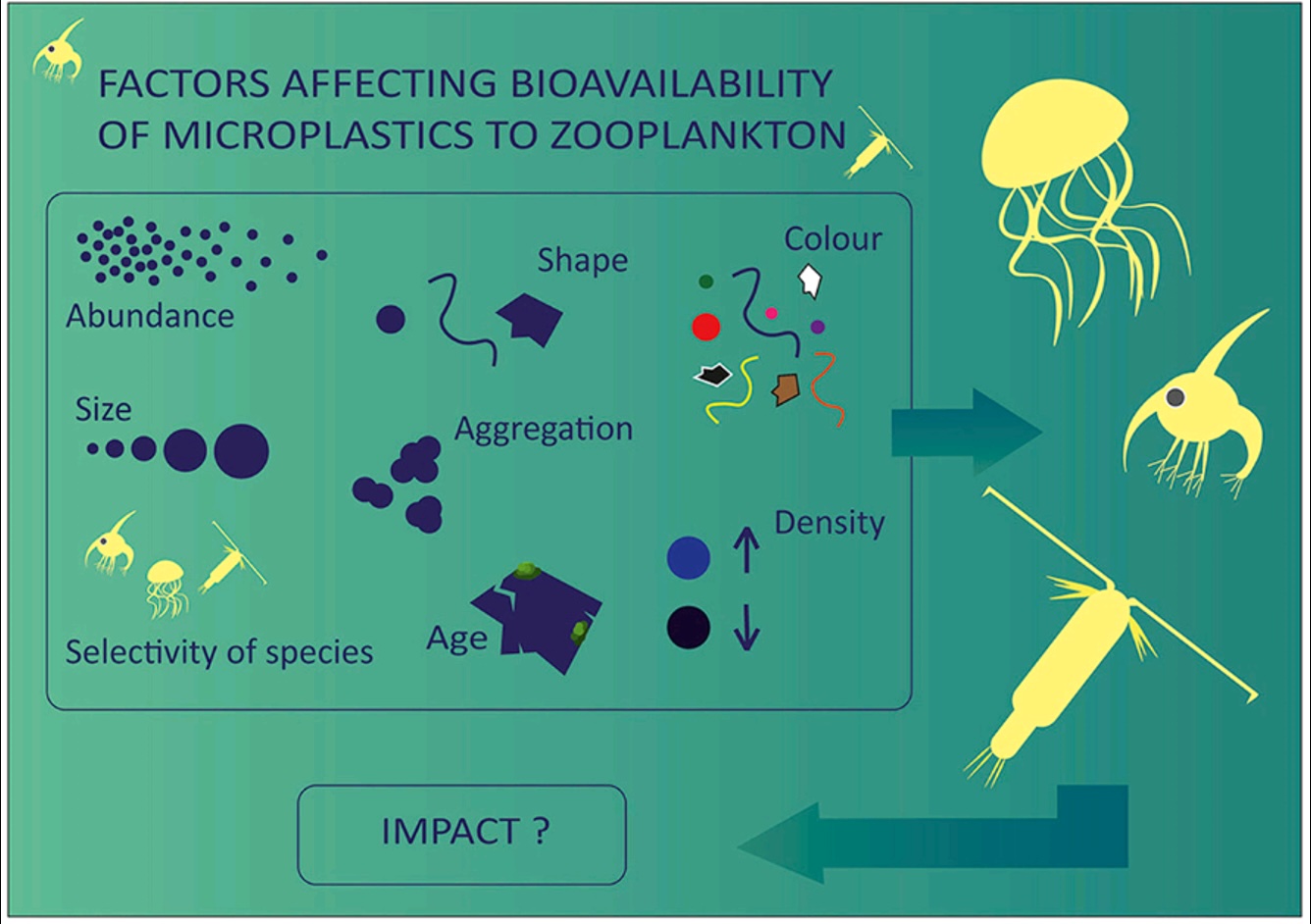
A review by Botterell and co-workers (Botterell et al. 2019) found that several physical and biological factors can influence the bioavailability of microplastics to zooplankton, such as size, shape, age and abundance.
Corals
5.3 Secondary Consumers
..and so on up the food chain.